
Methodology

[“You love a student, then you teach the student to love and take care of themself. We can never let anyone we love to devalue themself. We must lift them up; we must let them know how valuable they are. I also try to impart to students that they should stop thinking of things too much and feeling things a bit more.” – Marian Seldes]
A teaching day and a performance day are not that far apart.
There is a lot of preparation to be done before one can walk into the classroom ready to do the kind of work that matters but also changes the wiring in the emerging artists I am privileged to help facilitate.
The challenge is that they are all so amazingly and beautifully different. Each one a laboratory unto themselves.
I fall in love with them early, even the ones I don’t like.
I find something in their person, something incredibly possible that they reveal in a series of exercises, prompts and questions I bring in those first sessions. Personality emerges despite themselves. A wish escapes, a trauma, a reveal they did not mean to allow. Or did they? Ah, art!
It’s been a hard time to be on campus, which in many ways is mirroring the chaos and heartbreak of our current political climate. It still prides itself as a temple of learning but does not hide its business first approach anymore. It’s a wonderful place to work, but excellence must now bow to profit. Learning, yes, but at a price. Faculty experience it, but students feel it.
So, the sanctuary of the classroom, when you are in the business of truth telling and expression, is to take in the world and retreat from it for a blessed timeless moment into the interior exploration of creativity, experimentation, and the weightlessness of liberation.
I spend the first third of the semester having the students talk as a group, to each other, partner up, go on check-in walks, tell each other their histories, but also, a secret, a dream, a hurt. This simple process of socialization is essential to art making, finding your tribe.
They learn to hold things for each other – feelings. And soon they see that this is a way of how to welcome a character into a play. In empathy.
It’s not like we don’t know this, but now we are attaching it to the art process.
They are dramaturging for each other and they don’t even know it.
This generation does not connect in the same way. Born into the immediacy and convenience of technology, they gravitate towards the comfort of their phone, their computer first, instead of each other. They also deal with a pretty sophisticated awareness of their mental health, the triggers, the trauma, and the complication of the world. There is always something to isolate into.
So, it’s nice to make them face each other, to make eye contact, to share an orange, to simply talk as strangers who will become colleagues, who seven weeks in are now connecting as collaborators.
I bring snacks. Not every course, but this semester I have brought a snack to each session of this playwriting class. We meet at that weird dinner time moment when we enter in sunlight and leave in the dark.
I find that the snack is not only an icebreaker, a gift, a comfort, but a ritual into being oneself, and, frankly, also a necessary supplement for hungry nineteen-year-olds.
I sometimes park up on the empty seventh and top floor of one of the school’s parking structures just to give myself an opportunity to vocalize before class.
I know, writing that sounds ridiculous.
But, in truth, teaching is a performance. An intense improvisation that has structure and mapping, but it never actually goes the way you think it will. Human connection changes one’s best intentions. Like a good character in a play, a surprising need and want shifts how and what to work on.
That has to do with the players, the students. When I build a course, I build it to the specific humans in the room. I diagnose them, then I try to make a journey that affirms, celebrates all their best instincts, and challenges them to deal and work with all the skills that are not yet theirs.
At our first session, I always introduce the notion that we can work without success or failure, simply doing and learning. The fuck-up space. A space for the wildest experiment in your writing to discover not just how good you are at something, but how far you can go.
They laugh, dismiss it, don’t really believe it, but as we move through the course, I move them into inquiry, approach, and a lot of affirmation before judgement.
I keep them courting failure, which is just learning. I help them find their own margins, their own style, their own writing, I reject their desire to be someone else.
They sometimes resent that I love everything, even if it needs a lot of work. The instinct is beautiful; the refinement of the idea is the work.
There are things I want them to know and learn, but there also things that they will bring into the room. Questions, ideas, passions, desires, and that will shift the entire journey we take.
In the end, even though we are making a play, what we are really doing is leading an artist towards their practice, vision and destiny.
A way of thinking, living and dreaming. I facilitate the journey of the citizen/artist. The essential member of society, its moral center, its vision, its dream of itself.
The students sometimes know this, and sometimes they come to it, but often in the making of a work of art, they start to realize that the beauty of the piece comes from an investigation or examination of what they know to be truth, empathy and self.
It’s remarkable to see them come into themselves. Not everyone, of course, but if the situation arises, one will reach, breakthrough, and inspire the others to go towards their best self.
When we read a new play cold in class, we read it together for the first time out loud, none of us know what to expect. Like good theatre, it will surprise us, disturb us, and hopefully enthrall us with idea.
I want to give that play every opportunity to succeed, so I tell the students to read with urgency, to lean into their gut reactions, and to be bigger than the room we are in.
They look at me confused, and I say, “You are bigger than the space you have been given in life, or are often asked to play in. Don’t sell yourself short, reach!” Some do and some don’t.
I will usually read stage directions, mostly to drive the text, and keep the energy in the room going. But, in truth, I am in full voice because nothing about the classroom is tiny, its dreams are big.
We are at week seven in the semester, slowly coming up on halfway there. They are just starting to write a full-length play. Why not. Yes, let’s be ambitious and ridiculous and kick out a full length first draft of a messy work of art.
Its someone’s birthday and I ask if they are going to go out drinking, and they confess they are nineteen years old. I look at them as if they are aliens, “Are you all nineteen?” OMG, I thought they were much older. I realize they were born years after 9-11.
It’s a diverse class, in race, gender, sexuality, region, class. Several of them come from divorced families, and surprisingly, a third have lost a parent to illness or accident. Grief is a shared trait of this group.
I am having a good time, maybe too good a time. In a world full of chaos and cruelty, the classroom remains sanctified space. I do miss the MFA’s and the PhD’s this semester, but the undergrads remind me of what hope means. They fill me with a tremendous amount of expectation.
Sometimes, they are resistant, or even annoyed, which of course, makes them annoying. But every challenge is an opportunity when you are making art. There no dead ends in invention, and I do enjoy when they give me the opportunity to guide them out of the tunnel of ‘cringe’.
Like the day a student said, “I hate it”, and I responded, “You love it?”, and they looked at me and said, “No, I said I hate it”, and I said, “That’s impossible, you must love it”, and they said, “You’re not listening” and I said, “I heard you perfectly”, and then they met me in the middle and said, “I don’t love it, but yeah, I do like it, I don’t know why I said I hate it.” Okay then.
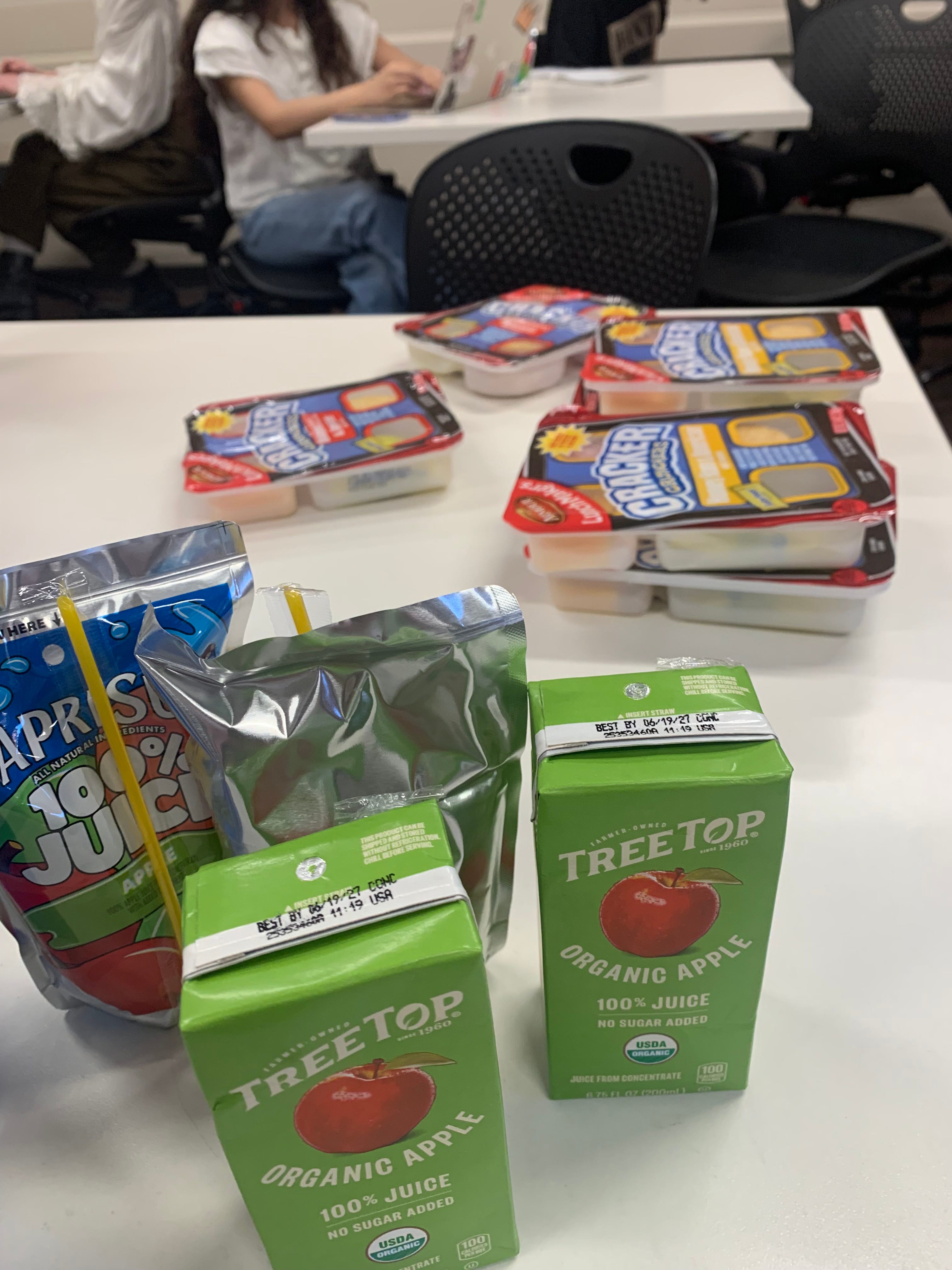
It’s nearly one a.m. and I am writing a lesson plan in case I need it. Also, what should the snack be? We just did international cookie day. Maybe I will take them on a nostalgic trip and splurge on Snackables. And a little apple juice carton.
Yes, then we will write a scene that takes place years before the play takes place. I like it.
Let’s make art, shall we?